
 |
306th squadron ( RNlAF)" Hawk" |
 |
306 sqn " Hawk" ( RNlAF) | |||
| Status: |
Disbanded
|
|||
| Version: | F-16A/B block 20 MLU | |||
| Role: | Training | |||
| Tailband: | N/A | |||
| Motto: | Videre Vincere Est (Seeing is conquering) | |||
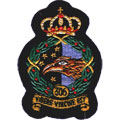
| Badge: | A yellow hawks head on a background split between a blue right part and a black left part. | |||
|
Disbanded on December 1st, 2010.
|
||||
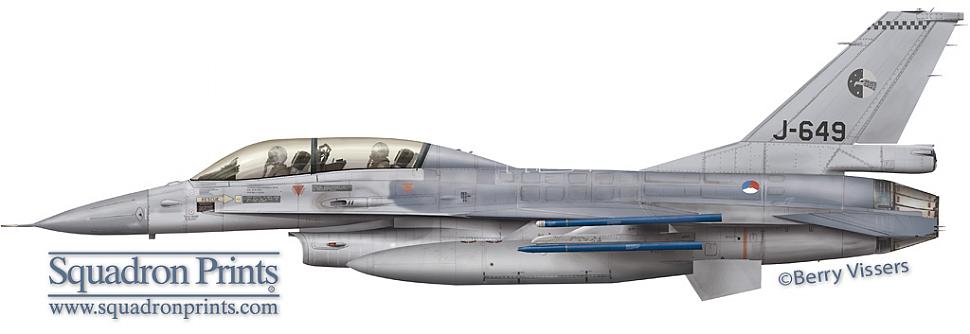
Sideways profile for 306 sqn in 2007.
F-16 History
The first F-16 for 306 sqn arrived at Volkel AB on February 18th, 1983. Operations with the type started after only a few months, because the unit was still flying the venerable RF-104G Starfighter.
Because of the dedicated reconnaissance task of the unit, it was also to keep using the Oudedelft Orpheus recce pod. This pod needed to be adjusted with the integration of a radar altimeter and was beefed up for the higher G-forces the F-16 would reach.
In spite of these upgrades, in the late eighties, early nineties, it was decided that the Orpheus pod would be phased out in 1993 due to its dwindling age. It was ultimately approved that the pod would soldier on until a replacement could be found. At first the Dutch Air Force preferred the ATARS (Advanced Tactical Air Reconnaissance System) system to be installed on their F-16s, but this project was cancelled by the USAF in 1993, thus condemning the Dutch efforts for a new recce system.
In 1997 the decision was taken to use the so-called MARS (Medium Altitude Reconnaissance System) pod which was also used by the Belgian Air Force. Only 4 examples of these pods where purchased since it would only be a stop-gap until a definitive solution would be available.
In 2004 it was finally decided by the Dutch government that the successor of the Orpheus system would be the 'Recce-Lite' system which is developed and manufactured by the Israeli Raphael company. A total of 6 systems is to be acquired at a total cost of around € 35 million. The Recce-Lite system is a digital reconnaissance platform which differs from other platforms in that it is integrated in a pod which can be hung under an intake hardpoint rather than being hung under the center hardpoint. This frees up necessary space to carry a simultaneous load of A/A weapons, A/G weapons, a recce platform, a targeting pod and an ECM device. In this scenario an F-16 can be deployed to fly a reconnaissance mission and destroy the found target immediately with the weapons it also carries, minimizing the time between detection and destruction. This also has the advantage that it minimizes the time that the foe can move targets.
Since 2001 however, 306 sqn lost its dedicated reconnaissance task because all F-16s upgraded with the MLU program can carry recce pods. All the units who have been assigned to the NATO reaction forces have been equipped with recce pods to fulfill this duty when the need arises. Together with the loss of this task, the squadron was tasked with conversion training of all RNlAF F-16 pilots. The unit is now a designated training unit within the Dutch Air Force.
In 2007 the Dutch government signed a contract with the USAF to perform a large part of the F-16 training in the US. This happened once before between December of 1989 and April of 1994 when the Dutch send 8 aircraft (7 A-models and 1 B-model) to be included in the 148th TFTS. This time a total 14 aircraft (9 A-models and 5 B-models) are based at Springfield IAP to perform the training duties. The only difference is that the airframes in the early eighties where included in the 148th TFTS and also received their squadron colors. This time, the 306th sqn is moved entirely and continues flying under its own colors.
Because of the disbandment of the Springfield wing, the F-16 had to be relocated. As in the past, a suitable place was found in Tucson with the 148th FS. Like in the past, the aircraft will be incorporated into the 148th and so the existance of 306 sqn was no longer necessary, causing it to be disbanded in December of 2010 with all F-16s leaving for their new home base in Arizona.
Aircraft Markings History
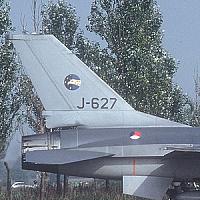
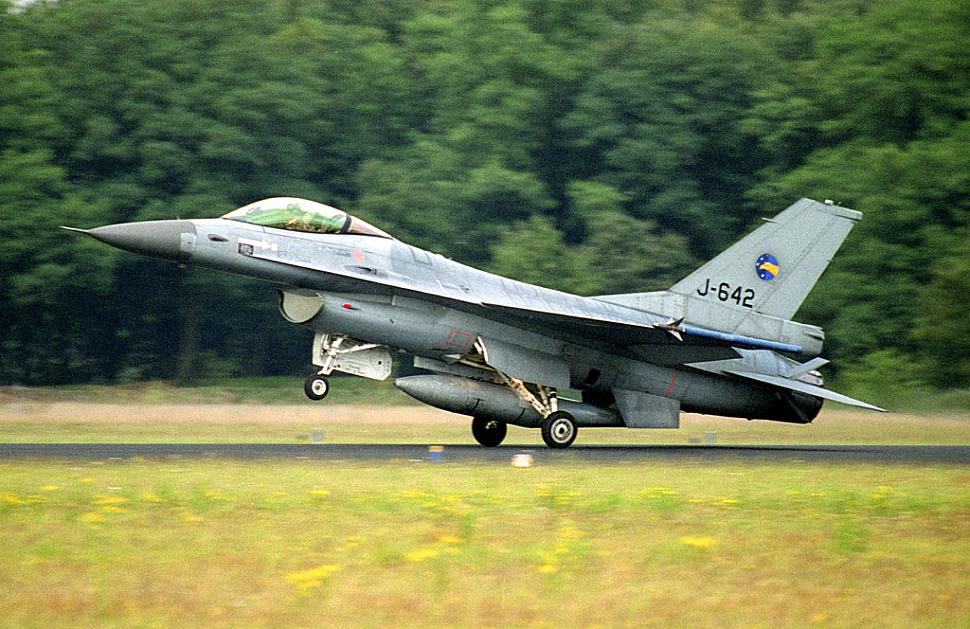
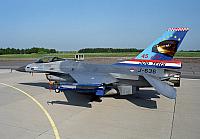
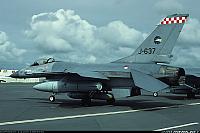
The markings consisted of the squadron's logo in the middle of the tail.
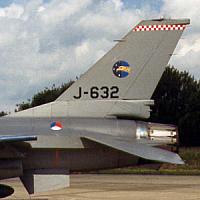
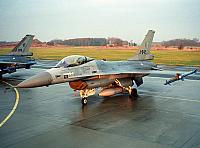
A little adjustment was brought in with the addition of a tailband in red and white. The squadron's logo didn't change.
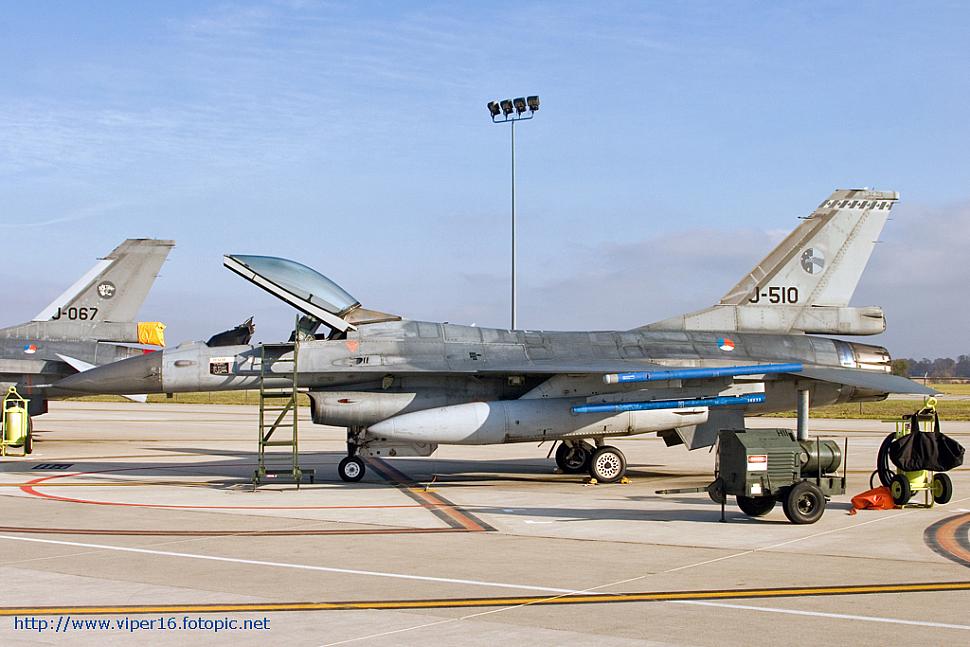
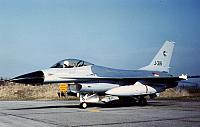
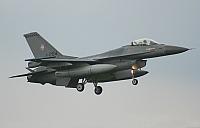
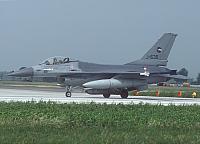
The scheme was toned-down in an overall gray finishing. The tailband could be absent from time to time.
Unit History
- 1953: Activation of the squadron in Volkel
- 1953: F-84G 'Thunderjet'
- 1954: F-84E 'Thunderjet'
- 1954: F-84E 'Thunderjet' (Bückeburg [Germ.])
- 1954: F-84E 'Thunderjet' (Laarbruch [Germ.])
- 1956: RF-84F 'Thunderflash'
- 1957: RF-84F 'Thunderflash' (Deelen)
- 1962: RF-84F 'Thunderflash' (Volkel)
- 1963: F-104G 'Starfighter'
- 1963: F-104G 'Starfighter' (Twenthe)
- 1965: RF-104G 'Starfighter'
- 1969: RF-104G 'Starfighter' (Volkel)
- 1983: F-16A(R) 'Fighting Falcon'
- 2002: F-16AM 'Fighting Falcon'
- 2010: Disbanded
Deployments
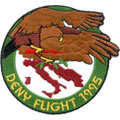 |
' Deny Flight' |
| Villafranca AB, Italy (April 12th, 1993 to December 20th, 1995) | |
| From the start of the Royal Netherlands Air Force F-16 operations in former Yugoslavia till December of 1995 it was part of 'Deny Flight'. This was an operation in support of the UN-led UNPROFOR troops stationed in Bosnia-Herzegovina. | |
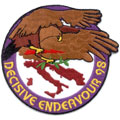 |
' Decisive Endeavour' |
| Villafranca AB, Italy (December 21st, 1995 to December 21st, 1996) | |
| The switch from the UNPROFOR mission to the IFOR mission also resulted in a name change of the air operations over Yugoslavia. As from December of 1995 it was called Decisive Endeavour. | |
 |
' Deliberate Guard' |
| Villafranca AB, Italy (December 22nd, 1996 to June 20th, 1998) | |
| When the UN forces in Bosnia-Herzegovina changed their mandate resulting in a name change from IFOR to SFOR, also the air operations were given another name. Ultimately, 'Deliberate Guard' formed the air asset for the SFOR troops. | |
 |
' Determined Falcon' |
| Villafranca AB, Italy (June 15th, 1998 to June 16th, 1998) | |
| Operation 'Determined Falcon' was a one-day operation to show force over Kosovo and Albania. NATO fighters patrolled this airspace coming only within 10nm of Serbian territory. This operation was meant as a warning to Serbian politicians to stop the bloodshed in this Yugoslavian province. | |
 |
' Deliberate Forge' |
| Amendola AB, Italy (June 21st, 1998 to July of 2001) | |
| Operation 'Deliberate Forge' was the successor of operation 'Deliberate Guard'. When the SFOR troops were reorganized into a smaller force, the covering air campaign also received a new name. This operation continued until the end of Royal Netherlands Air Force operations in Yugoslavia, which ended in the summer of 2001. | |
 |
' Allied Force' |
| Amendola AB, Italy (March 23rd, 1999 to June 10th, 1999) | |
| Operation 'Allied Force' was the codename for the almost three month long air strikes against Serbia. The Royal Netherlands Air Force has flown a majority of attack missions of all Western European countries in this operation. | |
 |
' Enduring Freedom' |
| Manas AB, Kyrgyzstan (October 1st, 2002 to December 31st, 2002) | |
| Operation 'Enduring Freedom' was initiated after the 9/11 attacks on the US. In Afghanistan this operation is aimed at fighting the remains of the Taliban which are still present in-country. | |
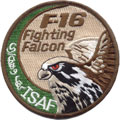 |
' ISAF - Air Task Force' |
| Kabul AB, Afghanistan (September 15th, 2004 to November 7th, 2004) | |
| The ISAF force is a NATO led operation to bring stability in Afghanistan and support of the local authorities. Also to protect ISAF ground forces during the presidential elections held in the autumn of 2004. |
F-16 Airframe Inventory
- All 306 sqn F-16s in our F-16 Aircraft Database (past and current aircraft)
- Current 306 sqn F-16s in our F-16 Aircraft Database
Photos
Hi to all,
306Squadron was reactivated in 2018 for getting ready for the MQ-9 Reaper, according this link of RNLAF:
Lately also MQ-9 Reapers with toned down 306 batches are shown on their website.
Please use this form to add any list any error or omissions you find in the above text.
Note: your comments will be displayed immediately on this page. If you wish to send a private comment to the webmasters, please use the Contact Us link.