
 |
MSgt Erik SingletaryInterview |

F-16.net: Please give us an overview of your military career and tell the readers a little about yourself?
Erik: I have 18 years of Active Duty time in the United States Air Force, as an Armament Systems Specialist (last time you will hear me say that) I am a Weapons troop (Loader). I was also given the opportunity to be a Crew Dawg for 3 years while stationed at Luke. I even spent a bit of time assigned as a member of a Specialist Flight. I have been Stationed at Shaw, AFB, Ramstein, AB, Luke AFB, Kunsan AB, and back to Shaw. This is pretty much a typical career for F16 mechs some may have a few more PCS moves but not too many. Of course I have the trips to SWA and other nasty places but not too many. I am a vet of Desert Shield/Storm and Provide Comfort, I saw the first Gulf conflict from the southern and northern theaters.
F-16.net: What is your name and current rank?
Erik: MSgt Erik Singletary, I am the Superintendent of Wing Inspections for the 20th Fighter Wing. I write the scripts and compile the results for the Wing Level Exercises. Not much wrenching anymore but I do get to spend time on the ramp on a regular occasion while conducting inspections and exercises of various types.
F-16.net: What is your most memorable time out on the ramp working on the F-16 both positive and/or negative?
Erik: I would most defiantly say it was my time on the flight line at Luke. I never worked harder of longer hours in my career but it was very satisfying. Contrary to popular belief a training base is not a walk in the park. The weather lets them fly all the time and the student tract is intense. Throw in the fact that those are some of the older jets in the active Air Force and it adds up to long hours.
Unlike most folks in my career field I was given the opportunity to be a Dedicated Crew Chief 88-0157 for 3 years while there. I was cut trained as a Quatlity Assurance inspector to inspect many CC tasks and the QA program at that time was assigned to the Squadron. Well the job went away and at the time the unit was low in Dedicated Crew Chiefs. The FISM Chief, Chief Reginald Green, the only person that I worked for that was drafted, offered me a jet, Me a WEAPONS Troop. I was flattered and jumped at the chance. I loved it. I took the DCC/ ADCC maintenance courses at Luke and had a huge learning curve. I learned so much about the jet that I never would have had I not branched out. I was on red x orders for crew chief work and weapons so I was called on quite often. It is really plain old fashioned fun to fix something that is broken. Pulling and installing a motor is an exercise in teamwork that most folks don't understand. You have one or two guys with tons of experience guiding and training young folks almost every time, the leadership of the team is paramount to the success.
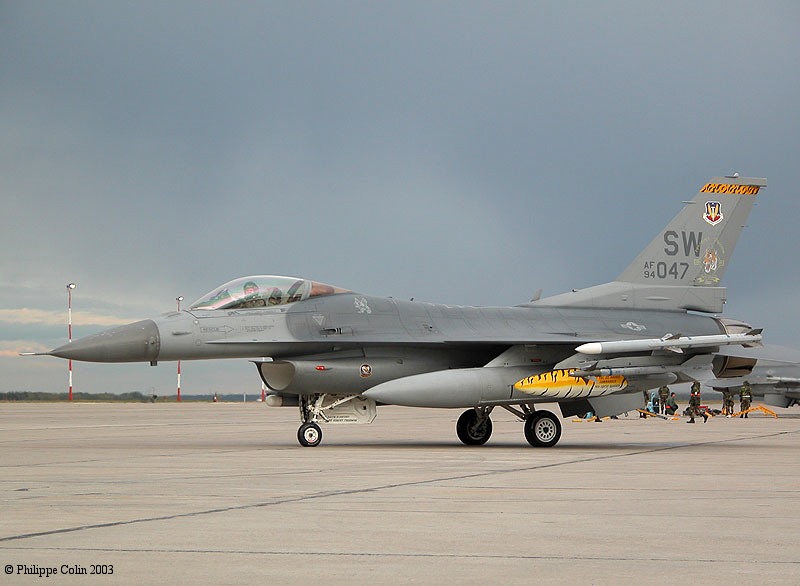
F-16.net: What is the hardest thing about working on the F-16? What is the best part about working on F-16's?
Erik: The hardest thing about working the F16 is the trouble shooting the MUX system. So many times the gremlins seem to run around the wing and laugh at you. With the newer testers and experience with a wiring diagram and Fluke meter most folks can figure it out but those transformers can be sneaky little critters. All the wiring and matrixes behind the Leading Edge Flap are tight to get too and the dang Station 5 matrix is upside down and total pain too. Thanks goodness it does not break that often. Many folks complain about the gun system, me, that is all I have ever known so it does not seem to hard. Though I screwed an install or two when I first started them.
The best thing about the F16 is it tends to be a pretty reliable jet. The more it flies, the better it flies. Most of the wear and tear items like wheels and tires, brakes etc are pretty easy to change. Even the motor is fairly easy once you get the hang of it.
F-16.net: Tell our readers what a MUX system is?
Erik: The MUX system is the wiring that carries the digital signals between the various computers on the F16. It uses a twisted pair wires and transformers to carry that information back and forth through the jet. The transformers can go bad with no outward way to identify which one is bad. The test sets we use are pretty good once you get to know what they are doing and how they do it. You can't count on them always and most of the time a trip to a wiring diagram is required. The MUX is very integrated and often the different avionics systems cross and the line become blurred as to which system is bad. With the CCIP upgrade the USAF is currently doing to the fleet. This is even more true. I really enjoy this kind of work and miss it often. It is very satisfying to take a 25 million dollar jet that does not work and using your head and hands make it work for the pilot. When munitions get on target the Loaders did more than put bullets in the gun and bombs under the wing.
F-16.net: Other than the F-16, what aircraft have you worked on? And how does the Viper compare?
Erik: None, All Viper all the time, I loaded a few other types as part of the Ample Gain program in Europe but that does not count.
F-16.net: Any fond memories of a specific deployment or exercise?
Erik: My first exercise was pretty interesting. I can remember reading "Red Storm Rising" through the lenses of M17 gas mask while suffering in the heat on the ramp at Shaw. It was in mid 1980s, Reagan was in office and the cold war was still very cold. Reading that book really drove home why we trained in chem gear. It set the tone for my attitude about exercises and suffering in that crap. I am very glad that we have not been attacked by Chems during my career.
No fond memories of the combat related deployments. But I did take a number of fun trips to Cold Lake, Alberta Canada. I was given a commendation by the 410th TFS (Canadian AF) for saving a Hornet. It took off with a nose wheel problem, I found metal shavings on the ground where it had chocked out from. The Hornet grabbed a wire when it came back. They found the bearings in the nose wheel had come out and if it had rolled out on landing it would have shelled the bearing into a motor. This happened in a US Navy Hornet not long after. They lost the motor and almost the jet.
F-16.net: Tell us about your Gulf War experience?
Erik: I was with the 363 TFW out of Shaw AFB. I really don't have any exciting things to say about it. I left the AOR right before the war official started because I had orders to Germany. When I got to Germany I quickly deployed to Turkey to support the effort from the north. I worked long hours on some, for the most part, healthy jets.
F-16.net: What assignment/squadron was your favorite?
Erik: The 308th Emerald Knights. I enjoyed the folks I worked with and the Phoenix area. The work was long and hard at times and very light during other times. Short of Nellis, they load more bombs there than any other CONUS base and is always fun for a loader to play with live bombs. I loved those folks like brothers and hated to leave.
F-16.net: Is there any particular F-16 tail number(s) to which you are fond?
Erik: This one:
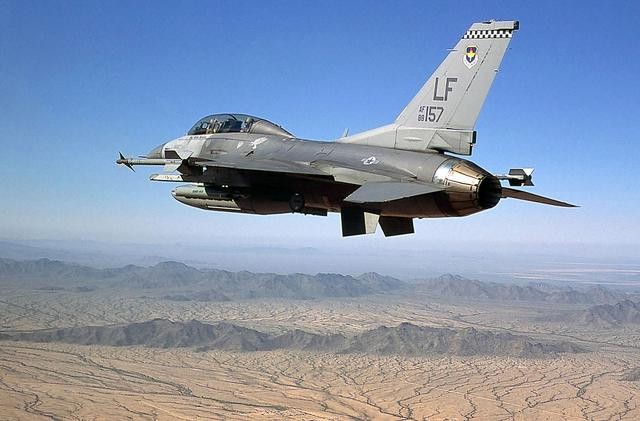
I was honored to crew this jet for 3 years from late 95 to late 98.
F-16.net: I understand this F-16D (#88-0157) was involved in a mishap?
Erik: Back in the late 90s the 220/220E motors had a few augs fail. Literally separate from the T-flange. Mine #88-0157 was on an incentive ride with a crew chief in the back. Well after a mach run the pilot pulled back to mil and wham! Off came the entire can, feathers, doughnut panel and all. The jet made it home because of some great flying by the pilot. "Danno" Cotton sticked my bent jet home after getting rid of the centerline and some inventive steps in the cockpit, I bought him beer. Since that time the USAF has upgraded the old cans to a new design that is lighter and stronger.
The jet was grounded for about 2 months and required structures folks from Ogden to put its tail back together. If you look closely at the picture (above) you will note the doughnut does not fit perfectly anymore. It takes some real chock alignment to get it on and off, I was really proud the day I launched it for its FCF she came home Code 1.
F-16.net: Tell our readers when did you get into riding bikes?
Erik: I started while stationed in Germany. As an outdoorsman I needed an outlet. I had a good friend invite me to give it a try. As kid I flat stunk at any ball sport. Well being skinny and strong paid off and I found a sport as an adult that I could enjoy and almost excel at. These days I am much slower do to family and real life constraints but at one time I could roll with some of the best, but I could never ride off. I am not genetically gifted to be a real racer.

F-16.net: How much biking you do, where you obtained your bike?
Erik: The bike in the photo is one of a few. The frame is made here in the US by a company called Klein. It is a propriety aluminum, with a carbon fork and other high tech goodies. I got the frame and built it up from parts I already had. The groupo (drive train) is not the latest and greatest but it shifts with authority and is holding up well. I also ride a mountain bike and tend to switch back in forth depending on the weather and the alignment of the stars.
F-16.net: Do you ride in any competitions?
Erik: Yes, though no longer. I raced the amateur scene in Germany, Arizona and Southern California with mixed results at best. I did medal twice in the Arizona State games back in the late 90s. On both of those occasions I got a silver, one because I blew it and the other by design, I helped set up a team mate for the win. Fun stuff. Racing is thing in my past now. Cycling is all about fitness and spending time in the outdoors. The picture I sent you was taken prior to a little race that was held on my base. I won that one but it does not really count.
F-16.net: How do you balance riding with your military career?
Erik: While stationed in Arizona, my heaviest racing time. I worked swing shift, I would go to work in the afternoon and work all evening. This meant my wife and kids where off at work and school during the day and I was home alone. To get out on the road and train was easy. I took my family to the races and when I could I turned the race weekend into a mini vacation in a nice hotel.
F-16.net: Did you ever go TDY with your bike?
Erik: Sure, I used to go to Nellis quite often from Luke and drove my own vehicle. Las Vegas has a great cycling scene and some beautiful places to ride like Red Rocks Canyon.

F-16.net: What is the best/worst practical joke you played on a victim(s)?
Erik: Had a hung gun at Luke. Had a young fresh to the F/L from armament shop troop out helping on his first hung gun. Well as we pulled the ammo out the bay and chutes we had him scream at the top of his lungs up the intake. We told him it was called an echo check (CCs do this one all the time to their youngins). I gave the line that as he screamed it would vibrate any hidden ammo and the two of us in the drum bay could find the rounds easier. He bought and was heard all over the 308th ramp. I was rolling around on the top of the jet while the entire swing shift on the ramp were about to die of laughter. It really worked once and I pulled off the prank.
The young airman turned out to be a pretty good troop with a great attitude and work ethic. He would kill himself to get the job done right and enjoyed the ramp so much more than the backshop even though the hours where longer and the conditions often sucked, it does get pretty hot on the ramp at Luke.
F-16.net: Any interesting stories or events you would like to share? (does not have to be F-16 related)
Erik: Scariest day in the AF. Well almost, most of the time you can't tell about those. I was an evaluator at Kunsan AB, Korea for an up coming Operational Readiness Inspection. We were in the initial response phase, folks were loading all over the ramp. I was in the 80FS flows when all the sudden a real world emergency call came over the radio. A 2000lb GBU24 had fallen off a trailer and pinned a weapons crew chief underneath it. It was a horrific sight, to see a young SSgt being crushed by a live 2000lb bomb. I saw the greatest teamwork of my career that day. Weapons troops came running to the scene while the rest of the F/L went the other way. We first tried in vain to pick the front of the bomb off this poor guys stomach, no joy, eight guys could not budge it. One you 3man (Jammer driver) figured out the J1 without rollers could get under the collar of the GBU where the guidance section would bolt on after loading. He cranked it up and swiftly drove under the nose of bomb. As he lifted the bomb I took the victim by the flak vest and pulled him from underneath. He was purple, the weight had crushed his stomach so much the blood could not flow correctly through his body. I held his head between my legs and try my best to comfort him while we waited for the ambulance. The poor kids that showed up thought it was an exercise input and started to just take his flak vest off, rolling him around like a rag doll. After some rearrangement by me they found the scissors and cut away his gear. He was air evacuated later that day with a crushed pelvis, broken leg and perforated intestines. Last I heard he was medically discharged. If it were not for quick thinking by the loaders on the scene he would have surely died. Yes the GBU was live but had no fuse in it. The weight is really the biggest danger when handling today's munitions.
F-16.net: What is an armament Systems Specialist and a Weapons troop (Loader)?
Erik: Armament System Specialist are Loaders, we load the weapons, fix broke jets, maintain the weapons systems on the aircraft. We also do the backshop work on the gun systems and alternate mission equipment, pylons, launchers etc.. It is fun work but rarely gets the credit it deserves. To load the jet safely takes practice. Loaders have to be evaluated every month with training munitions and are scrutinized very closely. Each team of three people, on small frame A/C, works together to get he job done. Each person is given a portion of the task and must know that task inside and out. Munitions are big heavy items put in precarious locations with strange equipment. You have to know what you are doing or folks get hurt. Just like in the story I just mentioned.
F-16.net: What advice would you give junior ground crew?
Erik: Follow the Book and think about every job you do. Lives depend on your work. Not just the life of the pilot but in combat you jet has to get there and get bombs on target. You must be observant of not just the job you are doing but the parts around that job. Folks often got fed up with me because I would go to fix one thing and find 3 more items but I had a good safe jet. I have gone beyond the tech data, for example while doing a gun spin on a acceptance jet it seemed to vibrate oddly. The spin was just not right. Well out came the gun, no tech data told me to pull it but I did. Further investigation found a warped stub rotor. Had the jet fired the gun it would have torn up tons of stuff. Be observant, if it does not seem right ask for a second opinion. There is nothing wrong with going to your coworker even those with less experience and having someone else look at your work. Be proud of your work but open to criticism.

F-16.net: Any words of advice to any of our young readers wanting to join the military?
Erik: Stay Clean! You can't go anywhere if you don't start right. Many young folks do things like drink under age or get mix up with the wrong folks and dabble in drugs with attitude they won't get caught. Well we all have to abide by the law and that starts from the youngest age. You have to be proud of yourself and your actions you can't do that if you don't have integrity.
Join for the right reasons. Don't have the idea it is all about the college money you can earn. America and our way of live is worth dieing for and if you doubt that then you are making the wrong choice.
F-16.net: Thank you for the interview!
- MSgt. Erik Singletary was interviewed online by Jon Somerville in May of 2004 -
Special thanks
20th FW for providing most of the photographs.
Note: Errors and omissions in the above text can be added here. Please note: your comments will be displayed immediately on this page.
If you wish to send a private comment to the webmasters, please use the Contact Us link.