| Date |
Status |
Local S/N |
Aircraft |
AF/Unit |
Version |
Info |
Details |
|
08 May 1975 |
[
act] |
01568 |
72-
1568
|

|
YF-16
|
News Article
|
Details
|
|
|
|
|
Belly landed on a grass area next to the runway at Carswell AFB, Texas. The right main landing gear jammed due to gyroscopic forces from right max-rate roll while the gear was being retracted. The aircraft was only slightly damaged (inlet duct buckling, FS227 bulkhead cracks, etc.). It was scheduled to appear at the Paris air show but due to the mishap the first prototype was sent.
|
|
|
Jan 1981 |
[
act] |
75745 |
75-
0745
|
|
F-16A
|
|
Details
|
|
|
|
|
Dead stick landing but was repaired.
|
|
|
Oct 1980 |
[
act] |
75747 |
75-
0747
|
|
F-16A
|
|
Details
|
|
|
|
|
The aircraft crash landed on Rogers dry lake bed at Edwards AFB due to a blown nose gear tire on take off during the annual open house air show. It was shipped to General Dynamics Fort Worth in a C-5 and rebuilt into the first F-16XL, flying back to Edwards one year later on December 2nd, 1981. The pilot survived unharmed but very shaken.
|
|
|
Unknown |
[
act] |
78001 |
78-
0001
|
USAF 34 TFS |
F-16A
Block
1
|
|
Details
|
|
|
|
|
Suffered a mishap on landing. The nose gear would not come down. The pilot tried everything to get it down, no luck. It was decided he would land on the runway and keep his nose up as long as he could. There was some concern the external wing tanks would drag so of course the crash trucks were there in case of fire. The pilot brought the plane in very slowly and landed on the mains, kept the nose up and almost came to a stop before the nose dropped. The radome was of course scraped up, the ring around the intake and the lower tacan antenna was gone. The wing tanks were about 5-6 inches from the ground. It was found out the seals in the nose gear were almost totally deteriorated. It was the original nose gear from the factory. Everything that was damaged was replaced and the plane was flying three days later. Anyone who knows the exact date, please let us know.
Update: A visitor wonders if this was the mishap involving pilot Dick Hoover who could not get the nose gear down at a Red Flag exercise, but also was not sure about the exact date.
|
|
|
Nov 1989 |
[
w/o] |
78002 |
78-
0002
|
USAF 310 TFTS |
F-16A
Block
1
|
|
Details
|
|
|
|
|
Engine turbine failed during a take-off roll sending pieces of the turbine blades through the fuel cell. Pilot aborted take off after seeing the fire light and shut down the engine. After the pilot opened the canopy and jumped out found the entire tail of the F-16 on fire. The aircraft was sent to depot but was never repaired.
|
|
|
11 Feb 1985 |
[
w/o] |
78004 |
78-
0004
|
USAF 310 TFTS |
F-16A
Block
1
|
|
Details
|
|
|
|
|
Destroyed near Luke AFB, Arizona at Gila Bend Auxillary Air Field due to an engine failure. Pilot ejected safely.
|
|
|
01 Oct 1979 |
[
w/o] |
78006 |
78-
0006
|
USAF 16 TFTS |
F-16A
Block
1
|
|
Details
|
|
|
|
|
Crashed in Nevada due to an engine problem. An MOT&E aircraft piloted by Paul R. was lost as it ran out of flight control authority. The pilot was simply rocking the wings at low altitiude to acknowledge an F-15 simulated attack over Nellis range. The flight control limitations were not fully known or understood by engineers and pilots in those early days, and the triple ejection racks (TERs) loaded on stations 3 & 7 disrupted airflow over the wings causing loss of control at low altitude. Paul ejected successfully and due to his zoomie training at the academy and was able to steer himself clear of the fireball without injury.
|
|
|
24 Jan 1991 |
[
w/o] |
78009 |
78-
0009
|
USAF 127 TFTS |
F-16A
Block
1
|
|
Details
|
|
|
|
|
Collided with F-16A (80-0536), near Beaumont, Kansas. The pilot, Major Cary Carlin, was unfortunately killed.
|
|
|
23 Jan 1990 |
[
act] |
78010 |
78-
0010
|
USAF 184 TFG |
F-16A
Block
1
|
|
Details
|
|
|
|
|
The aircraft hit support cables for a radio station tower damaging wing and tail but it was easily repaired.
|
|
|
06 Apr 1981 |
[
w/o] |
78013 |
78-
0013
|
USAF 34 TFS |
F-16A
Block
1
|
|
Details
|
|
|
|
|
Crashed at Holloman AFB, New Mexico due to fuel starvation. After being written-off, it was transferred to Lowry TTC as a GF-16A
|
|
|
12 Apr 1982 |
[
w/o] |
78016 |
78-
0016
|
USAF 16 TFTS |
F-16A
Block
1
|
|
Details
|
|
|
|
|
Flew into the ground at Dugway range, Utah at Michael AAF. Aircraft lost control during an attempted emergency landing. Pilot was able to eject safely. It was then put in the dump at Hahn Air Base. Later used for ABDR.
|
|
|
11 Mar 1982 |
[
act] |
78019 |
78-
0019
|
USAF 16 TFTS |
F-16A
Block
1
|
|
Details
|
|
|
|
|
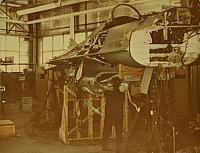
Ran off the runway at Salt Lake City International Airport caused by a main gen/CSD failure. Had extensive damage to the right wing and fuselage. The wing was replaced from a block 10 aircraft. An interesting note to this repair is that the fuselage was reassembled on wooden cradles, with no precision alignment. The misalignment was discovered when the boresight was accomplished after repair, the fuselage was "twisted" to the right approx .250" from the F.S. 189 bulkhead forward. The gun and HUD mounts had to be moved .250" to compensate. It actually turned out to be the 466th TFS's best bomber after that.
|
|
|
26 Mar 1980 |
[
w/o] |
78023 |
78-
0023
|
USAF 57 FWW |
F-16A
Block
5
|
|
Details
|
|
|
|
|
Destroyed in a fire due to an engine failure that sent some turbine parts through the main fuel cells. The pilot, D.W. Bell, was from the Operational, Test & Evaluation squadron but using 388th TFW aircraft ejected safely after trying to restart the engine. The fact that the aircraft did not blow up was a relief to some early pilots as they were not convinced that the new designed fuel cells would perform as advertised. The fuel cells are sealed partitions in the fuselage. However, the major concern was about the fly by wire flight control system and what happened if the power was totally lost if the flight controls went "stupid". It was well understood that loss of flight controls could cause 20 Gs in less than a quarter of a second.
|
|
|
22 Mar 1990 |
[
w/o] |
78041 |
78-
0041
|
USAF 466 TFS |
F-16A
Block
5
|
|
Details
|
|
|
|
|
Had a mid-air collision with F-16A (#78-0045) near Wendover, Utah. The pilot, Major Tom Ward, ejected safely.
|
|
|
20 Mar 1982 |
[
act] |
78044 |
78-
0044
|
USAF 34 TFS |
F-16A
Block
5
|
Interview
|
Details
|
|
|
|
|
In Lt. Col. Pat "Gums" McAdoo's words:
"I was the first Viper pilot to successfully land the thing with a failed leading edge flap. Was early spring/late winter 1982. Maybe 20 March, tail number 044, as that log entry shows 0.3 hours and a precision approach. Weather was not ll that keen. Have the HUD video in VHS format."
"Maintenance troops had failed to insert a 'keeper' bolt that is supposed to keep the flap drive tubes from slipping apart. It's like a cotter key on a bolt. The flap drive motor has a spline gear on it and the drive tube has gear teeth that match up. So the drive tube gradually slipped out from the motor spline gear. When I rotated, the drive tube slid all the way out and the leading edge flap went up until the wing upper surface stopped it. Maybe 50-60 degrees. Another troop had his fail a few months later and the flap went to 90 degrees because he was going a lot faster when the drive tube failed. So I was at 160 knots and holding full left stick. Post-flight data revealed that I had about one pound of control authority for banking left. So I was holding 15-16 pounds of left stick the whole time. "
"I stayed at 170-180 knots, as I could still maintain control and wasn't gonna play Chuck Yeager more than I had to. Nevertheless, I was the first troop to fly the thing in that configuration, so everything was new territory. Bunted over to get opposite flap 2 degrees up and locked the flaps( LEF's go up when bunting over, or when weight is on wheels). I now had both LEF's up, and it seemed to help with the roll authority. Additionally, that other flap wasn't gonna be moving all over the place, and this kept things a little more predictable. "
"Came around on the ILS and landed in one helluva crab. The drag was so great that I almost landed short when I pulled off the power. As I was coming in a lot hotter than normal, I thought I would land long. heh heh, sucker dropped like a rock and I was able to make a mid-field turn off."
Exact date of this mishap is not known, but did happen in 1982.
|
|